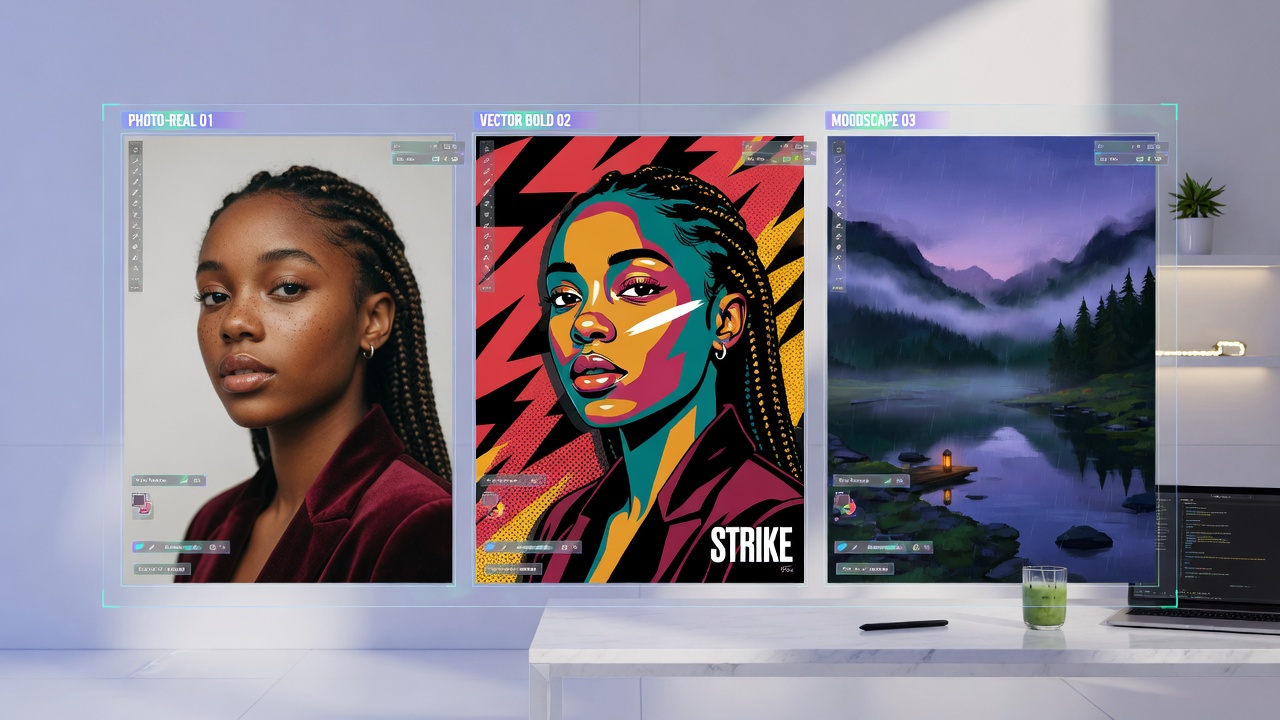
The AI image generator wars have entered a new phase. With xAI's Grok Imagine reaching wider availability and Google's Nano Banana (Gemini) model pushing photorealism boundaries, creators now face an embarrassment of riches—and genuine confusion about which tool fits which job.
Let's cut through the marketing noise and examine what's actually changed in AI image generation in 2026, and why the "best AI art generator" question has become impossible to answer with a single name.
The New Contenders: What Makes 2026 Different
A year ago, the conversation revolved around Midjourney v6, DALL-E 3, and Stable Diffusion variants. Today, the landscape has fractured into specialized niches. Grok Imagine arrived with exceptional instruction-following for complex prompts and a distinctive aesthetic that splits opinion—some love its bold saturation and graphic clarity, others find it too "digital."
Meanwhile, Google's Nano Banana Gemini image model has quietly become the go-to for photorealistic renders that fool the eye. Its integration with Gemini's language understanding means prompts feel more conversational, less like keyword incantations.
The shift isn't just about new names. It's about models developing personalities, strengths, and weaknesses distinct enough that serious creators now workflow across multiple tools rather than pledging allegiance to one.
Grok Imagine: Strengths and Trade-offs
Grok Imagine excels at:
- Complex scene composition with multiple subjects and clear spatial relationships
- Text rendering within images that's finally readable and intentional
- Prompt adherence that respects nuanced instructions without over-interpreting
- Speed that makes iterative refinement practical
The trade-off? Its aesthetic signature is pronounced. Images often carry a hyper-real, almost illustrative quality that works beautifully for concept art, editorial illustration, and branding—but can feel "too clean" for gritty, documentary-style work.
Grok's real advantage lies in its integration with xAI's broader reasoning capabilities. You're not just generating images; you're working with a system that understands context, can iterate based on feedback, and handles edge cases with surprising grace.
Nano Banana (Gemini): The Photorealism Champion
If Grok Imagine is the concept artist, Nano Banana is the commercial photographer. Google's latest model has cracked something fundamental about light, texture, and the micro-imperfections that make images feel photographed rather than rendered.
Where it shines:
- Product visualization that looks straight from a studio shoot
- Portrait work with believable skin texture and natural expressions
- Environmental lighting that respects physics without feeling sterile
- Material accuracy—fabrics drape correctly, metals reflect convincingly
The limitation? Nano Banana can be overly literal. Ask for something surreal or stylistically bold, and it sometimes defaults to "realistic interpretation of weird thing" rather than leaning into artistic abstraction. It's not the best AI art generator for experimental work—but for commercial applications requiring photographic credibility, it's unmatched.
The Rest of the Field: Still Relevant?
Midjourney hasn't stood still. Version 7 doubled down on artistic cohesion and mood—it remains unbeatable for establishing visual atmosphere and "feel." DALL-E 3's safety-tuned approach still makes it the safest bet for client work with strict brand guidelines.
Stable Diffusion's open ecosystem continues evolving through community fine-tunes. If you need absolute control or specialized styles (anime, architectural renders, medical illustration), there's likely a SD derivative trained exactly for that.
The AI image generator comparison in 2026 isn't about crowning a winner—it's about recognizing these tools have diverged into specialized instruments rather than remaining general-purpose cameras.
What This Means for Creators
The multi-model workflow is now standard practice. Professional creators describe their process less like choosing a single tool and more like assembling a toolkit:
- Grok Imagine for concept development and complex compositions
- Nano Banana for final photorealistic renders
- Midjourney for mood and atmosphere exploration
- Stable Diffusion variants for specialized needs
This creates a practical problem: maintaining subscriptions, learning different prompt syntaxes, and juggling separate interfaces. Platforms that offer unified access to multiple models—letting you test Grok Imagine against Nano Banana against others without switching tabs—have become genuinely useful rather than merely convenient.
The Prompt Engineering Shift
Another 2026 change: prompting styles are diverging. Grok Imagine rewards detailed, structured descriptions. Nano Banana responds better to natural language that describes the scene as you'd explain it to a photographer. Midjourney still thrives on aesthetic keywords and mood descriptors.
This means the skill of AI image generation increasingly involves knowing which model interprets which prompt style most effectively. The same text input yields dramatically different results across platforms—not because one is "better," but because they're optimized for different interpretation approaches.
Where We Go From Here
The AI image generator 2026 landscape resembles professional photography in the film era: different tools for different jobs, each with devotees who've mastered its quirks. The question isn't which is best—it's which fits your project, aesthetic goals, and workflow.
For creators, that means the real competitive advantage isn't access to any single model. It's fluency across multiple systems and the judgment to deploy the right tool for each specific creative challenge. The era of one-size-fits-all AI art generation is over. The era of specialized, purpose-driven image synthesis has begun.