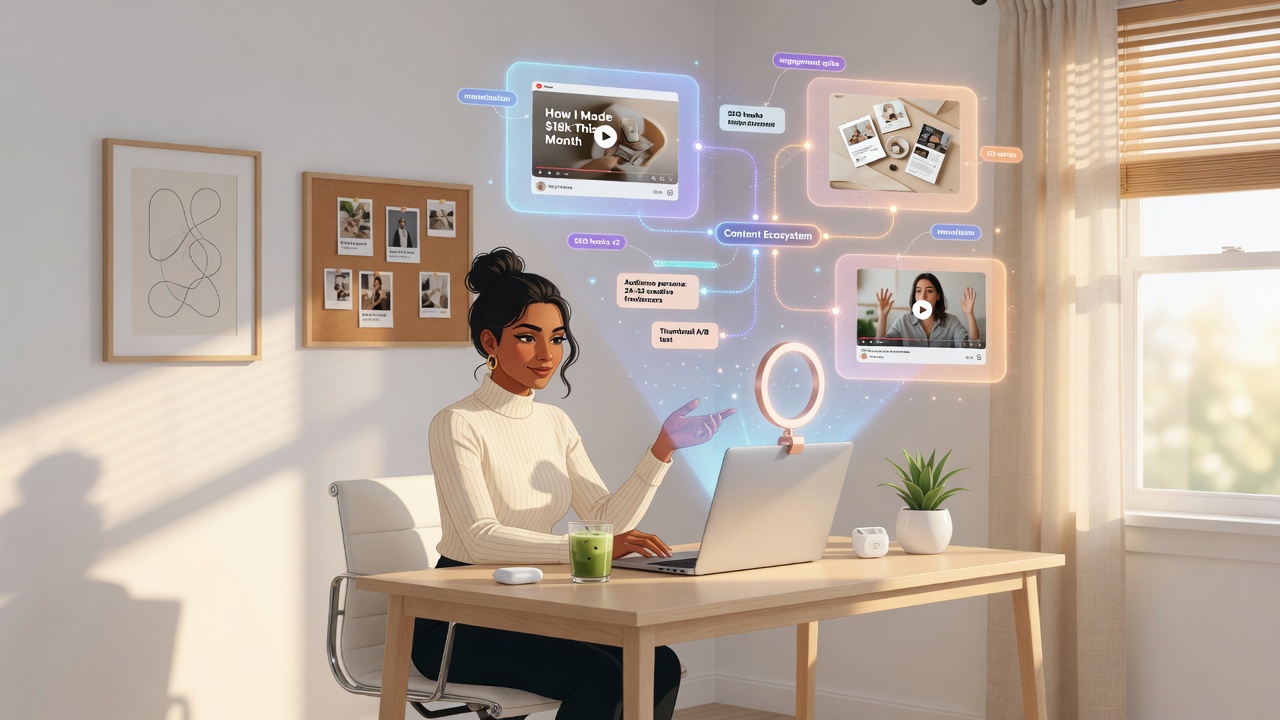
It's 7:30 AM. Maya opens her laptop with her coffee still steaming. By noon, she'll have scripted a YouTube video, generated custom thumbnails, produced a 90-second promo with voiceover, and scheduled three blog posts. She has no team, no freelancers on retainer, and no subscription fatigue from juggling eight different tools.
Maya has an AI co-founder. And she's not alone.
The Death of the Tool Stack
For years, content creators lived in browser-tab hell. ChatGPT for scripts. Midjourney for images. Descript for audio. CapCut for video. Notion for organization. Each tool brilliant in isolation, each requiring its own login, learning curve, and monthly fee.
The friction wasn't just financial—it was cognitive. Every platform switch meant context loss. Copy-paste became the duct tape holding creative workflows together, and creative momentum died in the gaps.
Today's solo creators are rejecting that fragmentation. They're not looking for better individual AI tools for content creators—they're demanding something radically simpler: one platform that does it all.
What Multi-Modal Actually Means for Creators
Multi-modal AI isn't just a buzzword. It's the difference between using AI and actually building with it.
Here's how Maya's morning unfolds inside an all-in-one AI platform like Brainy Vision:
8:00 AM — Ideation & Scripting
She opens a chat interface and dumps her raw idea: "I want to explain the psychology behind doomscrolling for Gen Z, 8-minute video, casual but credible tone." The AI returns a structured script with hook, three main points, and a CTA. She edits inline, tweaking the voice to match her brand.
9:15 AM — Visual Assets
Without leaving the window, she highlights a script section—"the dopamine loop graphic"—and generates four image concepts. She picks one, requests a variant with warmer tones, and drops it into her asset library. No export. No upload. No friction.
10:00 AM — Video Production
She pastes her final script into the video module. The AI suggests b-roll concepts, transitions, and pacing. She generates a 90-second short and a longer YouTube edit simultaneously, each optimized for platform specs. Her voiceover? Cloned from three minutes of sample audio she recorded once, two months ago.
11:30 AM — Repurposing & Publishing
She asks the AI to extract five quote cards and three blog angles from the video script. Two clicks later, she has a carousel for Instagram, a LinkedIn article draft, and a Twitter thread. She schedules everything from the same dashboard.
By lunch, Maya has produced what would've taken a small team a week—and she did it without alt-tabbing once.
The Real Unlock: Context That Carries
The magic isn't that these AI content creation suite tools exist individually. It's that they remember each other.
When your image generator knows what your script is about, it doesn't need another prompt. When your video editor understands your brand voice from previous chats, it doesn't generate generic templates. When your entire workflow lives in one ecosystem, the AI stops being a tool and starts being a collaborator.
This is what makes multi-modal AI platforms genuine co-founders for solopreneurs. They don't just execute tasks—they hold context, learn preferences, and eliminate the overhead that used to require a team.
Why This Matters Now
The creator economy is at an inflection point. Audiences are more fragmented, platform algorithms more demanding, and production quality bars higher than ever. Meanwhile, venture funding has dried up and brand budgets are tighter.
The creators thriving in this environment aren't the ones with the biggest teams—they're the ones moving fastest. They're testing more ideas, shipping more formats, and iterating in public while their competitors are still waiting on their video editor to send revisions.
AI tools for content creators used to mean "get help with one bottleneck." Now it means "run the entire business without hiring."
And the solopreneurs who recognize this shift early—who adopt an all-in-one AI platform as their co-founder rather than their assistant—are the ones building sustainable, profitable content businesses in 2025.
Your Turn
Maya isn't a unicorn. She's just early.
The tools that let one person do the work of ten aren't coming—they're here. The question is whether you're still duct-taping together a tool stack from 2022, or whether you're ready to work the way the next generation of creators already does.
If you're curious what it feels like to move this fast, Brainy Vision was built exactly for this workflow. Chat, image, video, voice, and publishing—all in one place, all talking to each other. No context lost. No momentum killed.
Try it free. See if you feel the difference.